The Complete Coffee Guide: Machines, Methods & Beans
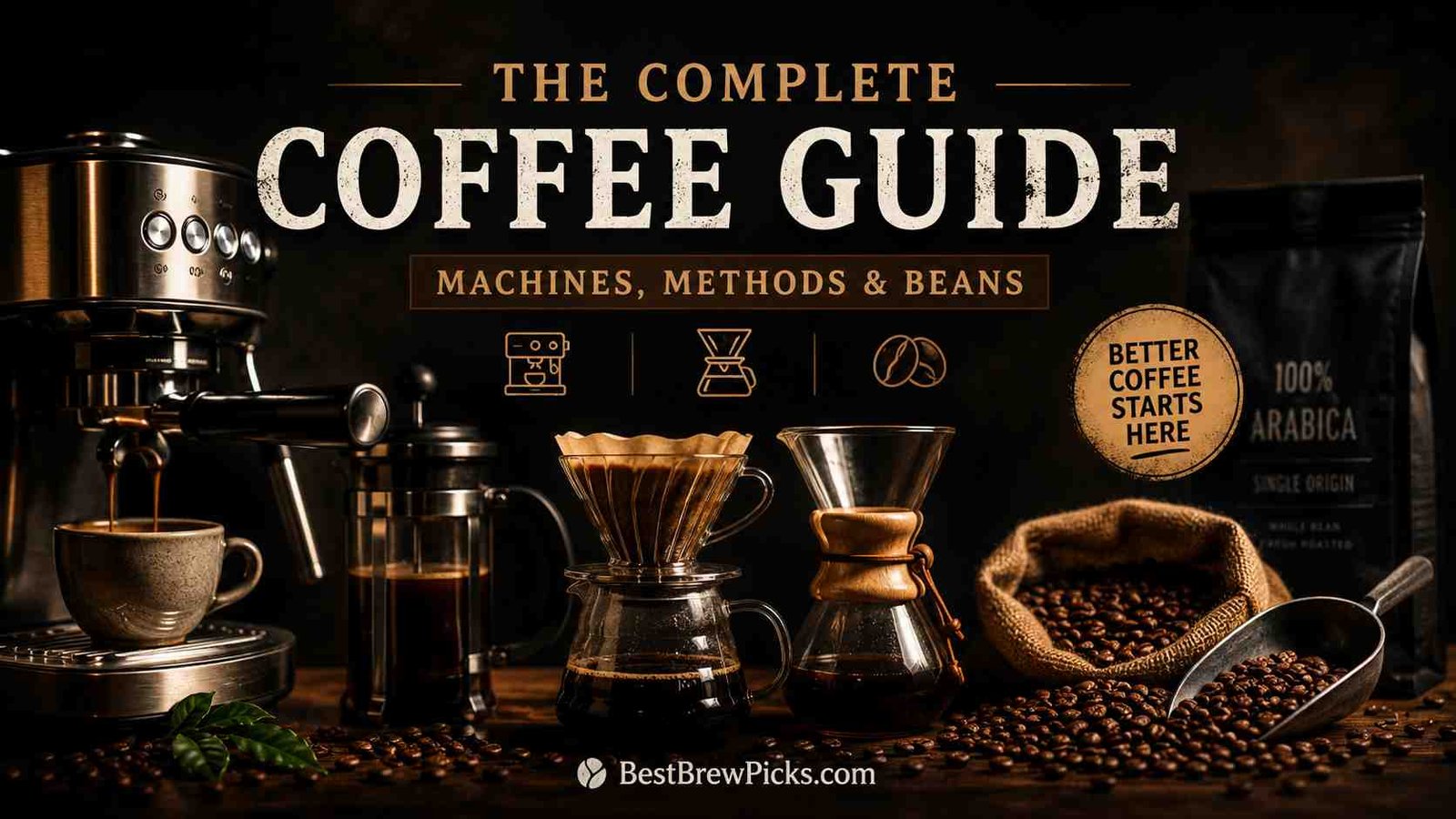
The Complete Coffee Guide: Machines, Methods & Beans explains how coffee makers, brewing methods, bean choices, and roast levels shape flavor in the cup. It gives beginners a clear starting point and helps experienced coffee drinkers fine-tune results with better grind, water, and technique choices.
This guide matters because small changes in brew ratio, temperature, extraction, and freshness can change a cup more than most people expect. It helps readers choose the right setup for their budget, taste goals, and daily routine, whether they brew one mug at home or build a more advanced coffee station.
This article covers the main brewing methods, the most useful equipment, the role of coffee beans, and the flavor differences between roast levels. It also shows where each method performs well, where it falls short, and how to match the right method to your goals.
Coffee Basics That Matter
Coffee quality starts before the brew method, because bean freshness, grind size, water quality, and temperature all affect extraction. The Specialty Coffee Association recommends a brew temperature range of 195 to 205°F, which gives you a practical target for most home brewing methods.
Good coffee also depends on matching your gear to your habits. A simple drip brewer works for convenience, while a pour over, French press, or espresso machine gives you more control and usually demands more attention.
According to the SCA, an ideal brewed coffee strength falls in a narrow zone that balances sweetness, acidity, and body. That standard helps you evaluate whether your coffee tastes weak, harsh, or flat instead of guessing.
Water, grind, and dose
Water quality matters more than many beginners realize, because water makes up most of the final cup. If your water tastes dull or heavily chlorinated, your coffee will usually taste worse too.
Grind size controls how fast water extracts flavor. Fine grinds suit espresso, medium grinds suit drip, and coarse grinds suit French press, but each method still needs small adjustments for your bean and taste preference.
What good extraction looks like
Balanced extraction gives you sweetness, clarity, and a clean finish. Under-extraction usually tastes sour or thin, while over-extraction often tastes bitter, dry, or harsh.
That balance gives you a simple diagnostic tool. If your cup tastes off, you can adjust grind, water temperature, brew time, or dose instead of replacing your machine.
Coffee Machines and Brewers
Your brewing device shapes convenience, consistency, and cleanup. A machine can save time, but it cannot fix poor beans or bad brewing habits, so the best choice depends on how much control you want.
For most home users, the right setup balances cost and repeatability. A cheap automatic brewer can produce solid daily coffee, while a more advanced espresso setup can deliver better texture and stronger flavor at a much higher price.
| Brewer type | Typical cost | Strengths | Limits |
|---|---|---|---|
| Drip coffee maker | Low to moderate | Easy, fast, consistent | Less control over flavor detail |
| Pour over | Low | High clarity, low entry cost | Needs attention and practice |
| French press | Low | Full body, simple setup | Sediment and less clarity |
| Espresso machine | High | Pressure-based shots, milk drinks | Expensive and maintenance heavy |
For beginners, drip and pour over usually make the most sense because they cost less and teach basic extraction. Espresso delivers more intensity and flexibility, but it also costs more and punishes small mistakes.
For a broader buying framework, see The Complete Coffee Guide: Machines Methods & Beans and Espresso Machine vs Coffee Maker: Which to Buy?. If you want a tighter equipment focus, Best Coffee Makers Under $100 helps separate value picks from overhyped options.
Where espresso fits
Espresso creates concentrated coffee with pressure, short brew time, and a syrupy texture. It works well for straight shots and milk drinks, but it does not suit people who want a quick, low-maintenance cup.
That tradeoff matters in real use. A home espresso setup can cost several hundred dollars or more, while a good manual brewer often costs a fraction of that and still makes excellent coffee.
Where drip and pour over fit
Drip coffee suits busy mornings because it gives you volume and consistency with little effort. Pour over suits people who want more control and cleaner flavor, but it asks for better technique and more attention.
Neither option does everything well. Drip usually gives less nuance, while pour over demands more skill, so the better choice depends on whether you value ease or precision.
Beans, Roast, and Flavor
Bean origin, species, and roast level change flavor before you even start brewing. Arabica usually brings more sweetness and acidity, while Robusta usually brings more body, caffeine punch, and bitterness, which makes each one better for different uses.
Roast level also matters because it shifts acidity, sweetness, and roast character. Light roasts usually preserve origin character, medium roasts often balance sweetness and body, and dark roasts emphasize deeper roast notes over brightness.
For a deeper breakdown of species and buying choices, Best Arabica vs Robusta Coffee Beans Explained helps you choose based on taste and use case. You can also compare origin-driven flavor through Single Origin vs Blended Coffee: Which to Buy?.
| Bean or roast | Flavor profile | Best use | Tradeoff |
|---|---|---|---|
| Arabica | Sweet, aromatic, nuanced | Filter coffee, specialty brewing | Usually pricier |
| Robusta | Bold, earthy, more bitter | Espresso blends, strong coffee | Less delicate flavor |
| Light roast | Bright, floral, fruity | Pour over, tasting origin notes | Can taste sharp if brewed poorly |
| Dark roast | Smoky, chocolatey, heavy | Milk drinks, bold preferences | Can mask origin character |
Roast style also changes what the coffee can and cannot do well. Light roast excels at showing origin detail, but it can taste underdeveloped if your grind or temperature is off; dark roast hides defects better, but it often flattens complexity.
Freshness and storage
Coffee tastes best soon after roasting, especially when stored away from light, heat, air, and moisture. Whole beans usually hold flavor better than ground coffee because they expose less surface area to oxygen.
That means buying beans in smaller amounts often beats buying in bulk. It also means grinding right before brewing usually improves flavor more than buying a more expensive machine.
Methods Compared
Different brewing methods create different sensory results, and the right choice depends on what you want in the cup. If you prefer clarity, pour over often wins; if you want body, French press often works better; if you want intensity, espresso usually leads.
These methods also demand different levels of effort. A method that gives better flavor on paper may still fail in practice if you do not want the cleanup, workflow, or consistency challenge.
| Method | Flavor | Ease | Best for |
|---|---|---|---|
| Pour over | Clean, bright, detailed | Moderate | Flavor-focused drinkers |
| French press | Heavy, rich, textured | Easy | Full-bodied coffee fans |
| Espresso | Intense, concentrated, layered | Difficult | Milk drinks and shots |
| Automatic drip | Balanced, reliable, familiar | Very easy | Daily home brewing |
For a practical technique reference, How to Brew the Perfect Cup of Coffee gives a broader framework that applies across methods. For method-specific workflow, Pour Over Brewing Steps: A Beginner’s Guide and French Press Brewing Guide (Timing Water Temp) offer more targeted instruction.
Manual methods usually cost less and teach you more about extraction. However, they ask for consistency, so they reward attention and punish sloppy measuring more than automatic brewers do.
When a method fails
Pour over can taste weak if you grind too coarse or pour too fast. French press can taste muddy if you leave too many fines in the cup, and espresso can taste sour or bitter if pressure, grind, or dose drift out of range.
That is why method selection should follow skill level as much as taste preference. A person who hates tinkering will usually get better results from a good drip machine than from a cheap espresso machine with poor controls.
Buying for Real Use
The best coffee setup depends on how often you brew, how many people you serve, and how much work you want to do each morning. A solo drinker who wants a simple cup may do fine with a grinder and a pour over cone, while a household that drinks several cups a day may prefer an automatic brewer.
Cost also shapes the decision. A $40 manual setup can make excellent coffee, but a $300 to $800 espresso setup can unlock milk drinks and café-style shots that manual gear cannot replicate.
For budget planning, Home Coffee Setup: Budget vs Premium Setups shows where spending actually improves taste and where it only adds complexity. If your focus is value, Coffee at Home vs Café: Cost Breakdown helps you compare long-term savings against convenience.
- Choose a drip brewer if you want low effort and consistent daily coffee.
- Choose pour over if you want clarity and low startup cost.
- Choose French press if you want body and a simple manual routine.
- Choose espresso if you want concentrated coffee and milk-based drinks.
- Choose whole beans and a grinder if you want the biggest flavor gain per dollar.
If you buy equipment in the wrong order, you often waste money. A better grinder usually improves coffee more than a more expensive machine, so that should often come first unless you specifically need automation or espresso pressure.
What to prioritize first
Start with fresh beans, a consistent grind, and clean water. Then choose the brewer that fits your patience, budget, and taste goals.
That sequence gives you the highest return because each step improves every cup afterward. It also keeps you from overpaying for features that do not solve your real problem.