Coffee Grinder Types Explained
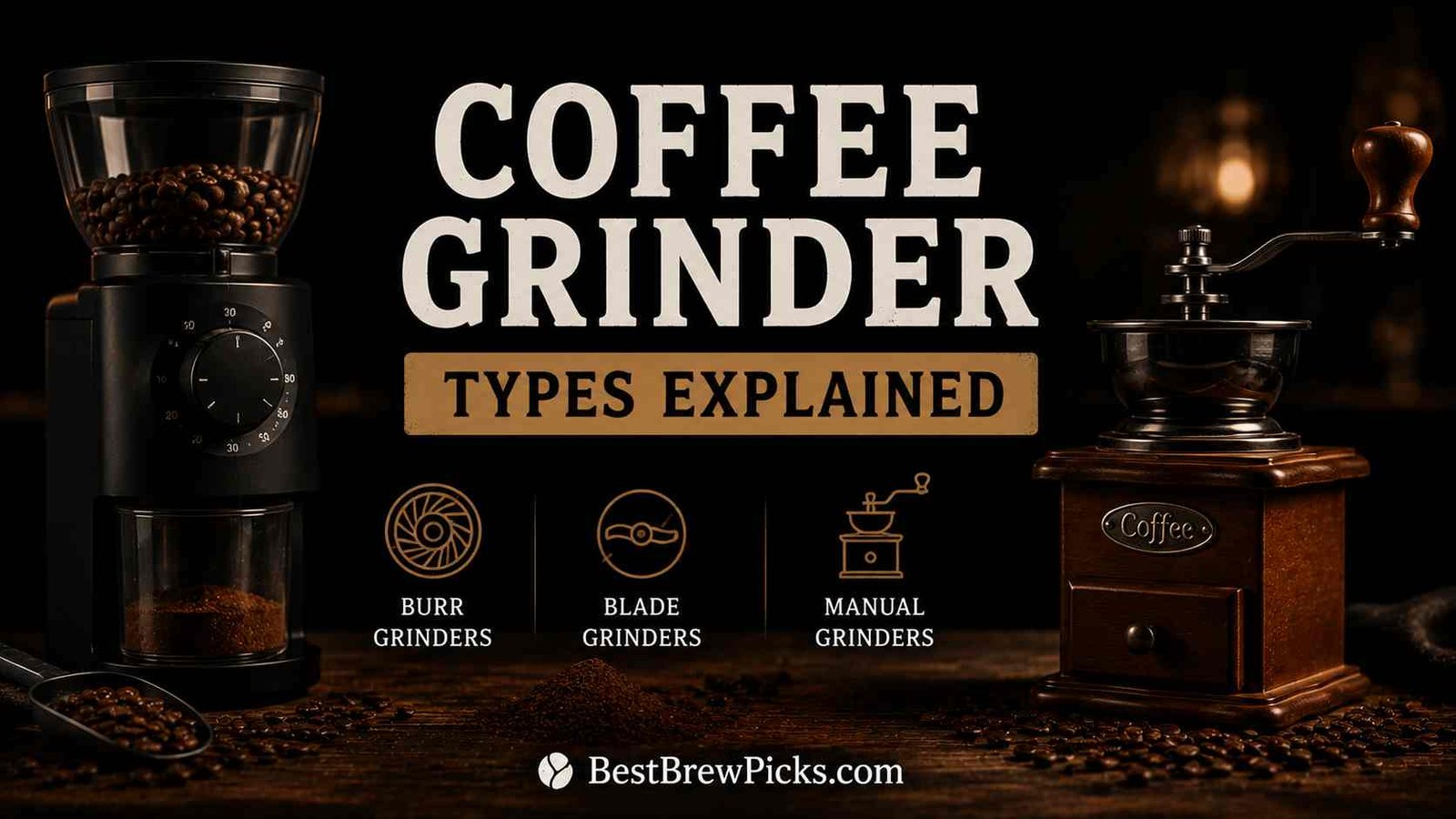
Coffee Grinder Types Explained helps you understand how different grinders affect flavor, consistency, and brewing results. The right grinder can improve your coffee more than a new brewer because it controls particle size, which directly affects extraction, strength, and taste.
This matters because uneven grinds create uneven extraction. Some particles over-extract and taste bitter while others under-extract and taste sour. Therefore, buying the right grinder type for your brew method is one of the most impactful equipment decisions you can make.
This article explains the main grinder types, how they differ in performance, and which one fits your brewing style. It also covers burr shapes, grind size standards, and real-world cost comparisons so you can invest wisely.
How Grinders Work?
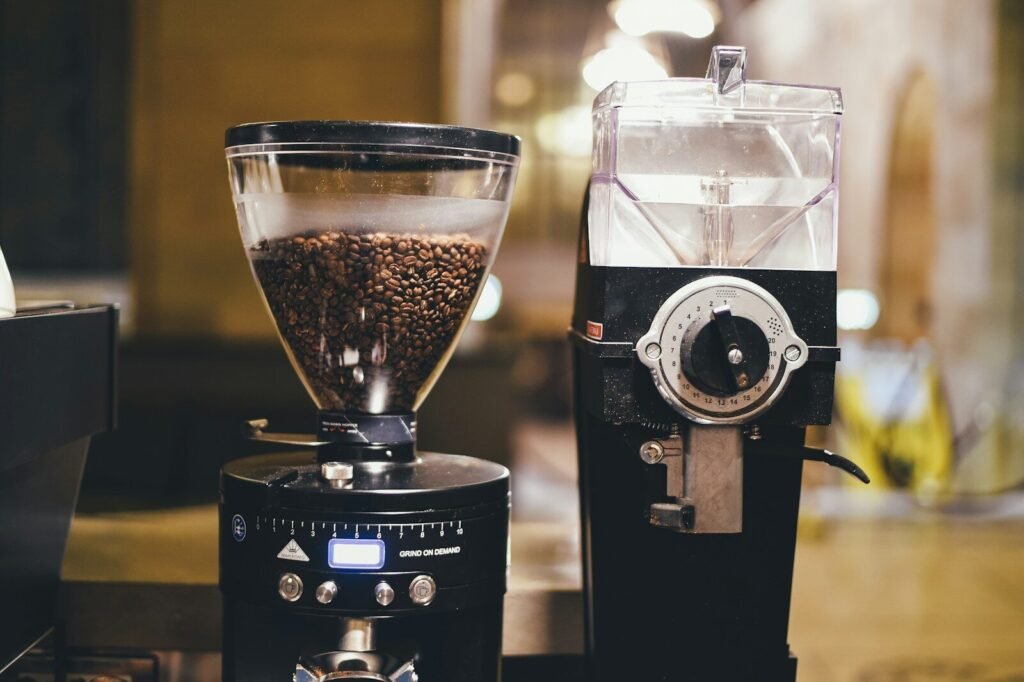
Coffee grinders break beans into smaller particles so water can extract flavor compounds. The size and uniformity of those particles determine how quickly water dissolves solids and how balanced the final cup tastes. When particles are too large, water cannot extract enough flavor, which creates weak, sour coffee. When particles are too small, water extracts too much, which creates bitter, harsh coffee.
Blade grinders use a spinning metal blade to chop beans randomly. They are inexpensive and widely available, but they produce uneven particle sizes. As a result, some grounds extract too quickly while others barely extract at all, which creates muddled or bitter flavor. The blade also generates heat through friction, which can damage volatile aromatics and reduce the complexity of the final cup.
Burr grinders crush beans between two abrasive surfaces called burrs. One burr stays stationary while the other rotates, and the gap between them determines grind size. This mechanism produces far more uniform particles than blades, which leads to cleaner, more balanced extraction. Additionally, burr grinders generate less heat because they crush rather than chop, which helps preserve the delicate flavors that make fresh coffee worthwhile.
According to the Specialty Coffee Association, grind size should match the brewing method. The SCA recommends coarse grind for French press, medium grind for drip and pour over, and fine grind for espresso. That standard exists because different brew methods use different water contact times, and the grind must slow or speed extraction accordingly. Therefore, a grinder that offers precise adjustment across these ranges gives you more control over your daily cup.
For the broader equipment picture, The Complete Coffee Guide: Machines Methods & Beans explains how grinders fit into a complete home coffee setup. If you want to understand how grind specifically affects espresso, Best Coffee Grinders for Espresso gives a targeted buying guide.
Blade vs Burr Grinders
Blade and burr grinders serve different budgets and expectations. Blade grinders cost less upfront but compromise on consistency, while burr grinders cost more but deliver better flavor and more control.
Blade grinders work like small food processors. A motorized blade spins at high speed and chops beans until you stop it. The longer you run it, the finer the grind, but the particles remain uneven. That inconsistency makes blade grinders a poor fit for methods that demand precision, such as espresso or pour over. Furthermore, the lack of grind size adjustment means you cannot fine-tune for different brew methods.
Burr grinders use mechanical crushing to create uniform particles. You adjust the distance between burrs to change grind size, and the grinder produces a narrow range of particle sizes at each setting. Therefore, burr grinders suit anyone who wants repeatable results and cleaner flavor. They also allow you to switch between brew methods by simply turning a dial or moving a collar.
Cost comparison shows the real tradeoff. A basic blade grinder costs fifteen to twenty-five dollars, while entry-level burr grinders start around fifty to one hundred dollars. Premium burr grinders can cost several hundred dollars or more. However, the flavor improvement from a burr grinder is usually more noticeable than the difference between a basic brewer and a premium brewer. In fact, many coffee professionals recommend upgrading your grinder before upgrading your brewer.
For freshness and storage context, Whole Beans vs Ground Coffee: Freshness & Flavor explains why grinding just before brewing matters. That habit helps any grinder perform better, but it helps burr grinders shine because they preserve more of the bean’s original character.
Conical vs Flat Burr Grinders
Conical and flat burr grinders both produce consistent grinds, but they differ in geometry, flavor output, and price. Understanding those differences helps you choose based on your taste preferences and brewing methods.
Conical burr grinders use two cone-shaped burrs with ridges. Beans fall between the burrs by gravity, and the rotating cone crushes them downward. This design runs cooler, quieter, and usually costs less than flat burr alternatives. Conical burrs tend to produce a bimodal grind distribution, meaning some fine particles mix with larger ones. That creates more body and sweetness in the cup, which many espresso drinkers prefer.
Flat burr grinders use two horizontally mounted discs. One disc rotates while the other stays still, and beans pass between them sideways. Flat burrs typically produce a more uniform particle size, which creates cleaner, brighter cups with more distinct flavor separation. Filter coffee enthusiasts and light-roast fans often prefer flat burrs for this clarity.
Taste differences matter in practice. Flat burrs often highlight acidity and delicate notes, while conical burrs often emphasize body and roundness. Neither is objectively better; instead, the choice depends on whether you value clarity or fullness in your coffee. Additionally, flat burr grinders often run hotter and noisier due to higher motor speeds, which can be a consideration for home use.
For a deeper look at how these flavors show up, Coffee Flavor Wheel: Tasting Notes Explained helps you identify what you taste. If you want to understand how roast level interacts with grind type, Light Roast vs Dark Roast: Taste Differences gives useful context.
Hand Grinders vs Electric Grinders
Hand grinders and electric grinders both use burrs, but they differ in speed, effort, portability, and price. The right choice depends on your budget, space, and how much physical effort you want to invest.
Hand grinders are compact, portable, and usually cheaper than electric burr grinders. They work well for travel, camping, and small kitchens. However, grinding by hand takes one to three minutes depending on dose and grind size, which can feel tedious for daily use. Additionally, cheaper hand grinders often use less stable burr mounts, which reduces consistency. Premium hand grinders with steel burrs can match entry-level electric grinders in quality but still require manual effort.
Electric grinders are faster, more consistent, and easier for daily use. They suit households that brew multiple cups or anyone who wants convenience. Entry-level electric burr grinders start around eighty to one hundred fifty dollars, while premium models cost three hundred to eight hundred dollars or more. The higher price usually buys better motor stability, more precise adjustments, and longer durability. Some electric grinders also include timed dosing and programmable settings, which add convenience for busy mornings.
Portability favors hand grinders strongly. A quality hand grinder weighs one to two pounds and fits in a bag. Electric grinders need counter space and an outlet, which makes them less flexible. Therefore, many coffee enthusiasts own both: an electric grinder for home and a hand grinder for travel.
Which Grinder Fits Your Brewing Style
The right grinder depends on what you brew and how much control you want. Different methods need different grind sizes, and some grinders handle certain ranges better than others.
Espresso demands fine, consistent grinds and usually benefits from high-quality burr grinders. Conical burrs are popular for home espresso because they handle fine grinding well and often cost less than flat burr alternatives. However, flat burr grinders can also excel at espresso if you prefer more clarity and brightness. The key is finding a grinder with micro-adjustments, because espresso requires precise calibration.
Pour over and drip brewing need medium grinds and work well with most burr grinders. Flat burrs often shine here because they produce the uniform particles that help water flow evenly through the coffee bed. Hand grinders are also popular for pour over because the medium grind setting requires less effort than fine espresso grinding. Additionally, the slower extraction of pour over benefits from the clarity that flat burrs provide.
French press and cold brew use coarse grinds, which almost any burr grinder can handle. Blade grinders struggle at coarse settings because they create too many fines, which clog French press filters and make cold brew muddy. Therefore, even a basic burr grinder improves these methods significantly. The coarse setting also requires less motor power, so even affordable burr grinders perform adequately here.
For a practical guide on grinder maintenance, Coffee Grinder Maintenance: Cleaning Burrs helps you keep any grinder performing well. If you want to understand how beans and grind interact, Best Arabica vs Robusta Coffee Beans Explained gives useful origin context.
What Grinders Do Not Fix
Grinders do not fix stale beans, poor water quality, or bad brewing technique. They also do not make up for a brewer that cannot control temperature or water distribution.
That limitation matters because many buyers overinvest in grinders while ignoring other variables. A premium grinder with stale beans still produces stale coffee. Similarly, a good grinder with hard water or incorrect brew ratios will not deliver its full potential. Therefore, the grinder should be part of a balanced setup that includes fresh beans, clean water, and proper technique.
Blade grinders also have a hard ceiling. No matter how carefully you pulse them, they cannot match burr grinder consistency. As a result, they are best suited for methods that tolerate variation, such as cold brew or cowboy coffee, rather than precision methods like espresso or pour over.
Burr grinders also require maintenance. Burrs dull over time, and coffee oils build up inside the chamber. Therefore, regular cleaning and eventual burr replacement are necessary to keep performance high. That ongoing care is a small cost compared to the flavor improvement, but it is a real factor in long-term ownership. Additionally, some electric grinders have motors that can overheat during long grinding sessions, which can damage the coffee and the machine itself.