
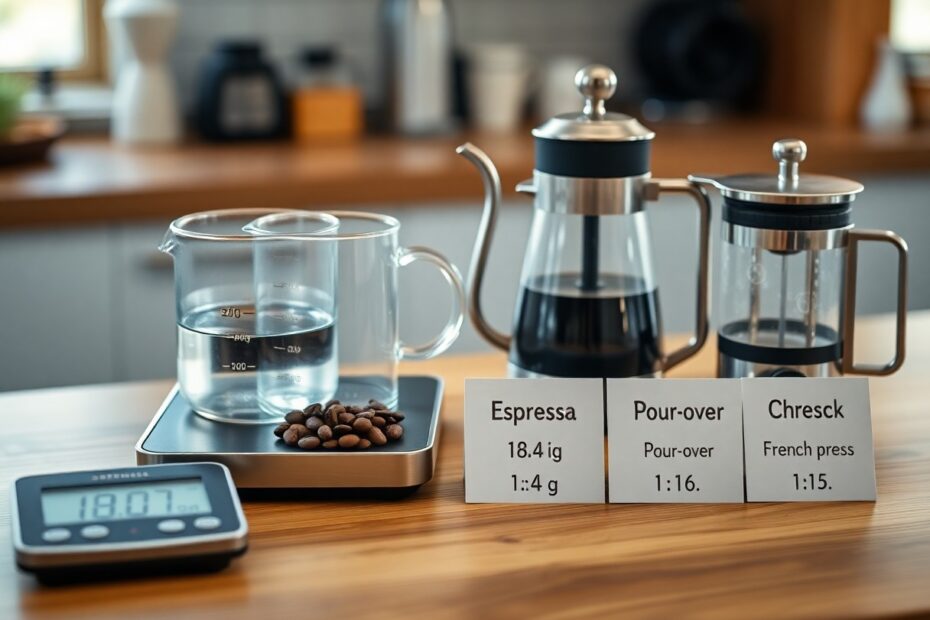
Method determines how much flavor you extract from your coffee grounds. You need the right balance of coffee to water to avoid bitterness or weakness. Each brewing technique-from pour over to French press-requires a specific ratio. You’ll brew better coffee when you match the ratio to your method.
The Arithmetic of Extraction
Understanding Solubles and Saturation
You extract flavor from coffee grounds every time you brew, but not all compounds dissolve at the same rate. Lighter, acidic notes emerge early, while deeper, bitter elements take longer. Water acts as a solvent, pulling these solubles from the bean’s structure. If you use too little water, you leave desirable flavors behind. Too much, and you pull out harshness. The balance hinges on how much water interacts with how much coffee-your ratio sets the stage for what dissolves and what stays trapped.
How Ratio Shapes Strength and Balance
Your chosen ratio directly controls the concentration of dissolved solids in your cup. A strong espresso at 1:2 packs intensity in a small volume, while a pour-over at 1:16 delivers clarity and brightness. These numbers aren’t arbitrary-they reflect how much water is needed to reach optimal extraction without tipping into under- or over-extraction. Adjusting the ratio fine-tunes both body and flavor profile, letting you shape the experience to your taste.
Practical Adjustments for Real-World Brewing
Even with precise ratios, variables like grind size, water temperature, and brew time affect extraction. You might follow a 1:15 ratio exactly, yet still end up with a flat or bitter cup if your grind is off. Treat the ratio as your foundation, then tweak other elements to refine the result. Small changes-like going finer or extending pour time-can compensate for environmental factors or bean freshness. Your best brew emerges when math meets observation.

The Drip Coffee Baseline
Standard Measurements for Consistency
You’ll find the most reliable results with a simple 1:15 to 1:17 coffee to water ratio when brewing drip coffee. This means one gram of coffee for every 15 to 17 grams of water, a range that balances strength and clarity without tipping into bitterness or weakness. Most home brewers start at 1:16-like 22 grams of coffee to 350 grams of water-for a well-rounded cup that suits a variety of palates and bean profiles.
Adjusting for Taste and Equipment
Your machine’s brew time and filter type influence how that ratio performs. Paper filters absorb more oils, sometimes calling for a slightly stronger ratio like 1:15 to enhance body. If you’re using a metal or cloth filter, you might prefer 1:16.5 to avoid over-extraction, especially with medium to dark roasts. Taste should guide your tweaks-bland coffee? Try more grounds. Harsh or bitter? Dilute the strength slightly and check your grind size.
Practical Tips for Daily Brewing
A digital scale and a consistent grind setting are your best tools for nailing the baseline every time. Pre-measuring your beans the night before saves time and reduces morning errors. Once you lock in a ratio that works with your machine and taste, stick with it for a week to build familiarity. Small changes compound-your perfect cup is built on repetition, not guesswork.
The French Press Plunge
Brew Time and Grind Size
You need coarse grounds to prevent silt from slipping through the mesh filter. A fine grind clogs the press or creates bitterness, while too coarse leads to weak, under-extracted coffee. Aim for consistency similar to sea salt. The four-minute steep time pairs perfectly with a 1:15 coffee to water ratio-15 grams of coffee per 225 milliliters of water delivers balanced strength without overwhelming sediment.
Plunging Technique Matters
After the timer ends, press the plunger down slowly and steadily. Rushing forces fine particles into your cup and increases bitterness. A smooth, even motion ensures clarity and preserves the full body French press is known for. Stop pressing once you feel resistance at the bottom-forcing it further stirs up sludge.
The Pour Over Ritual
Perfecting the Bloom
You start the pour over process by saturating the coffee grounds completely during the bloom phase. This initial 30 to 45 seconds allows trapped carbon dioxide to escape, ensuring even extraction. Use twice the weight of water to coffee-typically 60 grams of water for 30 grams of grounds-to initiate this release. Skipping this step leads to uneven brewing and muted flavors, no matter how precise your ratio.
Controlling the Flow
Water temperature and pour speed directly influence how flavors develop in your cup. Aim for water between 195°F and 205°F and maintain a steady, spiral pour from center to edge. This technique maximizes contact time without over-extracting bitter compounds. Your coffee-to-water ratio of 1:16 remains effective, but consistency in pouring matters just as much as measurement.
Final Drip and Flavor
The last drops falling through the filter signal the end of extraction. Total brew time should land between 2:30 and 3:30 minutes for a balanced cup. If it finishes too fast, your grind is too coarse; too slow, and it’s too fine. Adjust accordingly, keeping your ratio intact while refining technique. This ritual rewards patience with clarity and brightness in every sip.
The Cold Brew Steep
Steeping Time and Grind Size
You control the strength of your cold brew not just by how much coffee you use, but by how long it steeps and how coarse the grind is. A coarse grind prevents over-extraction during the long steep, keeping your brew smooth and free of bitterness. For best results, aim for a steep time between 12 and 18 hours at room temperature or in the refrigerator-longer times call for slightly less coffee to avoid overpowering the final drink.
Optimal Coffee to Water Ratio
Your ideal cold brew ratio typically lands between 1:4 and 1:8, depending on how you plan to serve it. If you’re making a concentrate to later dilute with water or milk, a 1:4 ratio gives you strong, rich base. For ready-to-drink cold brew, go with 1:8 using filtered water. This balance delivers a clean, mellow cup without acidity or harsh notes.
Dilution and Serving Tips
Once steeped and filtered, your cold brew concentrate benefits from thoughtful dilution. Start by mixing equal parts concentrate and water or milk over ice, then adjust to taste. This method preserves flavor integrity while letting you customize strength. Serve over fresh ice to maintain clarity and chill without watering it down too quickly.
The Espresso Extraction
Understanding the Standard Ratio
You’re working with a highly concentrated form of coffee when pulling a shot of espresso. The standard ratio most baristas follow is 1:2, meaning one gram of coffee produces two grams of espresso. This translates to a single shot typically weighing 18 to 36 grams when pulled from 18 grams of ground coffee. Your grind size, tamping pressure, and machine calibration all influence how closely you can adhere to this ratio while maintaining balance.
Adjusting for Taste and Equipment
Your machine’s performance and the freshness of your beans allow room for slight deviations. A slightly tighter ratio like 1:1.5 may yield a more intense, syrupy shot, preferred in traditional Italian style. If your equipment pulls faster or your beans are fresher, you might need a finer grind or a higher dose to avoid under-extraction. Precision matters, but your taste should guide final adjustments.
Finding Your Ideal Balance
You’ll notice bitterness or sourness if the ratio or extraction time is off. Aim for a shot that pours in 25 to 30 seconds, forming a rich, golden crema. Small tweaks in dose or grind can correct imbalances without overhauling your entire process. Trust your palate-it’s the best tool you have.

Final Words
Considering all points, your coffee experience hinges on one foundational element: the coffee to water ratio. This balance shapes the strength, clarity, and character of every cup, regardless of your brewing method. Whether you use a French press, pour-over, or espresso machine, consistency in ratio ensures repeatable, satisfying results.
You control the outcome by adjusting how much coffee meets each ounce of water. A standard 1:15 to 1:17 ratio works well for most methods, but personal taste and bean freshness allow room for refinement. Too little coffee yields a weak, watery drink; too much overwhelms the palate with bitterness.
Mastering this ratio transforms brewing from guesswork into a precise craft. You don’t need complex tools-just a scale, clean water, and attention to detail. When you dial in the right balance, every cup reflects your understanding of flavor, extraction, and the simple science behind great coffee.