
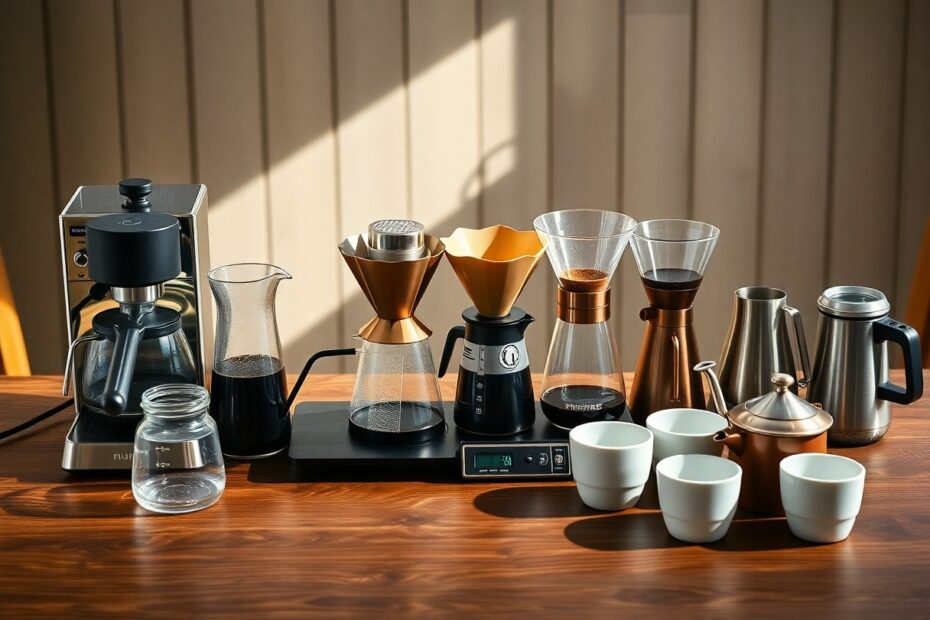
Most coffee lovers never realize how much the brewing method shapes their cup. You control the outcome-flavor, strength, clarity-based on your technique. This guide breaks down every major brewing method, comparing equipment, process, and results so you can choose what fits your taste and routine.

Critical Factors Influencing Flavor Extraction
Water quality and heat directly shape how compounds dissolve from coffee grounds. Your brew’s brightness, sweetness, or bitterness hinges on these variables. Assume that
- Mineral content affects extraction efficiency
- Temperature impacts solubility of acids and sugars
- pH balance alters perceived flavor clarity
Water Chemistry and Temperature
Minerals like calcium and magnesium help extract flavor compounds, while excessive alkalinity can mute acidity. Too soft or too hard water skews taste unpredictably. Your machine never compensates for tap water flaws.
Temperature between 195°F and 205°F optimizes extraction. Below this range, under-extraction yields sour notes; above it, bitterness dominates. Stability matters as much as peak heat.
Consistent water profiles ensure repeatable results. Specialty brewers often use filtered or custom mineral blends. Assume that
Water Properties and Their Effects
| Mineral Type | Impact on Brew |
| Calcium | Enhances body and structure |
| Magnesium | Pulls out bright, acidic notes |
| Bicarbonates | Buffer acidity, can flatten flavor |
Grind Consistency and Particle Size
Uniform particles ensure even extraction across all coffee grounds. Inconsistent grinding leads to some bits over-extracting while others under-extract. This imbalance creates muddy or harsh flavors.
Larger particles slow water flow and reduce surface area, favoring body over clarity. Finer grinds increase contact but risk over-extraction if brew time isn’t adjusted. Your method dictates the ideal range.
Blade grinders produce erratic sizes, while burr models deliver precision. Assume that
When particles vary widely, water follows the path of least resistance, bypassing finer grounds and over-saturating larger ones. This channeling effect undermines flavor balance, especially in espresso or pour-over. A consistent grind allows water to interact uniformly, unlocking layered sweetness, acidity, and aroma without unintended bitterness or hollowness. Your grinder is not just a tool-it’s the foundation of control.
Step-by-Step Execution for Top Methods
| The Pour-Over Technique | The French Press Process |
The Pour-Over Technique
Water temperature plays a pivotal role in extracting balanced flavors when using the pour-over method. You’ll want to heat water to between 195°F and 205°F-just off the boil-to ensure optimal solubility without scalding the grounds. Begin by placing a paper filter in the dripper and rinsing it with hot water to eliminate any paper taste and preheat the vessel. Discard the rinse water before adding medium-fine ground coffee, using a ratio of 1:15 to 1:17 coffee to water depending on your strength preference.
Start your timer as you pour just enough water to saturate the grounds, about twice their weight, and let them bloom for 30 seconds. This allows trapped carbon dioxide to escape, promoting even extraction. After the bloom, pour in slow, concentric circles, keeping the water level consistent and avoiding channeling. Aim to finish pouring by the 2:30 mark for a total brew time of around 3 minutes, yielding a clean, bright cup with pronounced clarity.
Once the water has fully drained through the filter, remove the dripper and enjoy your coffee immediately. The pour-over rewards precision and consistency, so small adjustments in grind size, pour speed, or water distribution can dramatically shift flavor. You’re in full control of each variable, making this method ideal for those who appreciate ritual and refinement in their morning routine.
The French Press Process
Coarseness of the grind defines the French press experience-too fine and you’ll get sediment and over-extraction, too coarse and the brew will taste weak. Use a burr grinder to achieve a consistency similar to coarse sea salt, then add the grounds to the beaker. A standard ratio is 1:15, but you can adjust to taste, keeping in mind that longer steeping times may require slightly coarser grinds to avoid bitterness.
After adding water just off the boil, stir gently to ensure all grounds are saturated. Place the lid on with the plunger pulled all the way up and let the coffee steep for exactly four minutes. This immersion method extracts rich oils and fine particles, giving the brew a full body and bold character. When time is up, press the plunger down slowly and steadily-rushing can agitate the grounds and cloud the cup.
Serving immediately after plunging prevents over-extraction, as the grounds remain in contact with water even after pressing. Pour every drop into your mug, but avoid disturbing the sediment at the bottom. The French press delivers a rustic, textured cup that highlights chocolatey and nutty notes, especially with medium to dark roasts.
Unlike filtered methods, the French press retains coffee’s natural oils and fine particles, contributing to its signature mouthfeel. This method doesn’t require paper filters, making it eco-friendly and cost-effective over time. You’ll notice a heavier body and more pronounced texture, ideal for those who prefer a bolder, more tactile coffee experience. Clean-up is straightforward-just discard the grounds and rinse the beaker thoroughly.
Pros and Cons of Each Brewing Style
Every brewing method offers a unique experience shaped by flavor, effort, and equipment. Your preference for boldness or brightness often determines which technique suits you best. The table below outlines key advantages and drawbacks across popular brewing styles.
| Brewing Method | Pros and Cons |
|---|---|
| French Press | Full-bodied coffee; easy to use; no paper filter needed. Sediment in cup; harder to clean; over-extraction risk. |
| Pour Over | Clean, bright flavor; precise control; lightweight gear. Steep learning curve; requires attention; slow process. |
| AeroPress | Fast brewing; portable; versatile with recipes. Small batch size; plastic construction concerns some. |
| Espresso | Rich crema; concentrated flavor; base for milk drinks. Expensive machine; high maintenance; steep skill requirement. |
| Cold Brew | Sweet, low-acid profile; long shelf life; easy prep. Long brew time; diluted result; large container needed. |
| Drip Coffee Maker | Convenient; consistent; brews multiple cups. Less control over extraction; can taste flat if low quality. |
| Moka Pot | Stovetop espresso-like coffee; durable; affordable. Risk of bitterness; metal taste possible; heat sensitivity. |
| Siphon | Dramatic presentation; clean and aromatic cup. Fragile equipment; complex setup; time-consuming. |
| Percolator | Rugged; great for groups; nostalgic appeal. Over-extraction common; harsh flavor; outdated design. |
| Immersion Drip (e.g., Clever Dripper) | Combines body and clarity; simple; forgiving. Limited availability; hybrid method confuses some users. |
Understanding these trade-offs helps you align your brewing choice with your daily routine and taste goals. No single method wins across all categories-your ideal brew depends on context.
Comparison of Body and Clarity
Body and clarity define how a coffee feels in your mouth and how distinct its flavors are. Methods like French Press retain oils and fine particles, giving a heavier, more textured mouthfeel. In contrast, paper-filtered pour overs remove most sediment, resulting in a cleaner, more transparent cup that highlights subtle notes like citrus or floral tones. Your preference for richness or precision shapes which method feels right.
| Brewing Method | Body and Clarity Profile |
|---|---|
| French Press | Full body, low clarity |
| Pour Over | Light to medium body, high clarity |
| AeroPress | Medium body, medium clarity |
| Espresso | Heavy body, moderate clarity |
| Cold Brew | Smooth body, low acidity, moderate clarity |
| Drip Coffee Maker | Medium body, moderate clarity |
| Moka Pot | Medium-heavy body, moderate clarity |
| Siphon | Light body, high clarity |
| Percolator | Heavy body, low clarity |
| Immersion Drip | Medium body, high clarity |
You’ll notice how filter type and brew time influence these qualities. Metal filters let oils through, boosting body, while paper filters enhance clarity by trapping fines. Immersion methods often emphasize body, while percolation methods favor clarity. Balancing these elements helps you refine your ideal cup.
Equipment Costs and Portability
Cost and ease of transport play a big role when choosing a brewing method, especially if you travel or have limited space. Some setups require a significant upfront
Professional Tips for Superior Coffee
- Use a precision scale to measure both coffee and water for consistent results.
- Grind beans just before brewing to preserve volatile flavor compounds.
- Store coffee in an airtight container away from light, heat, and moisture.
- Calibrate your grinder regularly to maintain optimal particle size.
- Clean your brewing equipment weekly to prevent stale oil buildup.
The pursuit of exceptional coffee begins with attention to detail in every step of the process.
Precision Weighing and Ratios
Weight matters more than volume when measuring coffee and water. Scoops can vary drastically depending on grind size, leading to inconsistent extraction. A digital scale accurate to 0.1 grams ensures you replicate the ideal coffee-to-water ratio every time-typically between 1:15 and 1:17. This precision allows you to fine-tune strength and balance based on bean origin and roast level. Even small deviations can shift the flavor profile from bright and floral to flat or bitter.
Water quality plays a supporting role in this balance. Using filtered water with balanced mineral content enhances clarity and sweetness in the cup. Tap water high in chlorine or dissolved solids can distort flavors and damage equipment over time. Always weigh your water after heating to account for evaporation during brewing. This small step maintains accuracy and improves reproducibility across different methods.
Adjusting ratios gives you control over intensity without sacrificing clarity. A stronger brew doesn’t require more coffee-it often means less water. The
Freshness and Storage Standards
Roast date is one of the most reliable indicators of coffee quality. Beans reach peak flavor between 3 to 14 days post-roast, depending on the method and origin. After this window, aromatic compounds degrade, leading to muted or stale notes. Always check packaging for a roast date, not just a best-by label. Buying in smaller quantities ensures you brew at peak freshness.
Oxygen, light, heat, and moisture are the enemies of fresh coffee. Exposure accelerates staling through oxidation and flavor loss. Store beans in an opaque, airtight container at room temperature, away from appliances that emit heat. Avoid the refrigerator or freezer unless you’re storing large batches for long periods-condensation risks moisture absorption and flavor distortion.
Grinding immediately before brewing preserves the most volatile aromatics. Whole beans retain freshness far longer than pre-ground coffee. The
For optimal results, consider dividing your beans into single-use portions if freezing is necessary. Wrap them tightly in airtight bags, removing as much air as possible. Thaw the entire portion at once to prevent repeated temperature shifts, which encourage condensation. While freezing can extend shelf life, it’s no substitute for frequent, small-batch purchases from trusted roasters. The
To wrap up
Following this detailed comparison, you now understand how each coffee brewing method shapes flavor, strength, and experience. The French press delivers a full-bodied cup rich in oils and sediment, ideal for those who appreciate boldness and depth. Pour-over methods like the V60 emphasize clarity and brightness, rewarding precision with clean, nuanced profiles.
You’ve seen how espresso extracts concentrated intensity through pressure, while cold brew offers smooth, low-acid refreshment suited for warmer days. Each technique demands different equipment, time, and skill, allowing you to match your routine and taste preferences with the right approach.
Your choice depends on what you value-speed, control, richness, or simplicity. No single method reigns supreme; each has strengths that suit distinct moments and moods. By experimenting with grind size, water temperature, and brew time, you refine results to match your ideal cup. Mastery comes not from following rules rigidly, but from adjusting variables to reflect your palate.