Why Your Coffee Tastes Bitter (And How to Fix It)
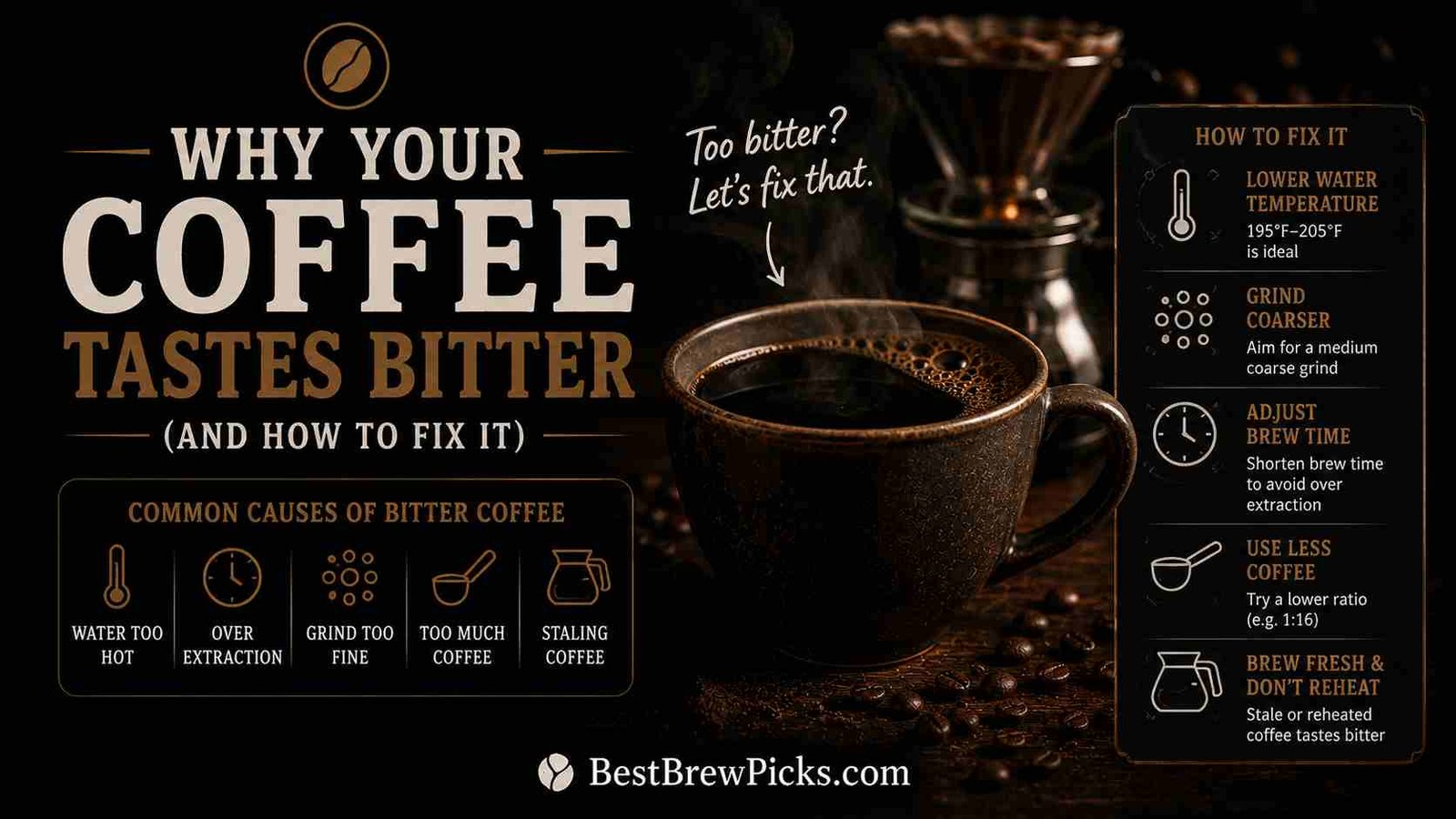
Why Your Coffee Tastes Bitter (And How to Fix It) usually comes down to over-extraction, stale beans, too-fine grind, water that runs too hot, or a roast that pushes too far into dark, smoky flavors. Bitter coffee can be normal in small amounts, but when it dominates the cup, it usually signals a brewing or freshness problem rather than a quality one.
This matters because bitterness can make even good coffee taste harsh, dry, and less enjoyable. Many US coffee drinkers assume they simply do not like coffee, when the real issue is often a fixable brewing mistake. As more people brew at home in 2026, learning how to identify bitterness helps them choose better beans, adjust their setup, and waste less coffee.
This article explains what bitterness actually means, why it shows up in the cup, how roast and bean choice affect it, and which brewing adjustments reduce it fastest. It also gives you a practical troubleshooting path so you can fix the problem without guessing.
What Bitterness Means in Coffee
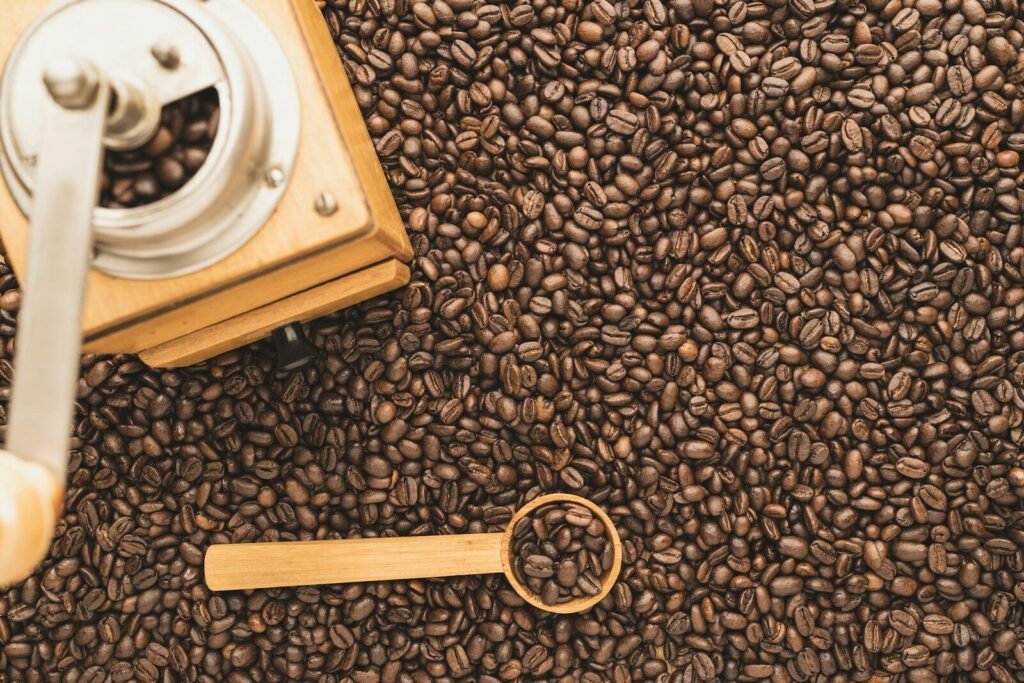
Bitterness is a taste quality that coffee always contains to some degree, especially near the finish. In a balanced cup, it can add structure, depth, and a pleasant dark-chocolate edge. Therefore, bitterness is not automatically a flaw. The problem starts when bitterness overwhelms sweetness, acidity, and body and leaves the cup tasting burnt, sharp, or dry.
Good coffee bitterness usually feels integrated. It sits alongside sweetness and acidity rather than fighting them. In contrast, unpleasant bitterness often tastes harsh, lingering, or papery. It can leave your mouth feeling dry or your throat feeling rough. That kind of bitterness usually points to over-extraction, a very dark roast, or stale coffee rather than the coffee character itself.
Understanding that distinction helps you troubleshoot more accurately. If the coffee tastes a little dark or cocoa-like, that may simply reflect the bean and roast. If it tastes like ash, burnt toast, or a dry aftertaste that lingers too long, then your brewing process likely needs attention. As a result, identifying the style of bitterness is the first step toward fixing it.
For a broader flavor framework, Coffee Flavor Wheel: Tasting Notes Explained helps you distinguish bitter notes from other flavors. If acidity also feels confusing, Understanding Coffee Acidity & Brightness explains how pleasant sharpness differs from unpleasant sourness.
Normal bitterness vs harsh bitterness
Normal bitterness adds balance and depth. It often appears as dark chocolate, cocoa, or roasted nut character.
Harsh bitterness tastes burnt, dry, or medicinal. That usually signals a brewing or freshness problem.
Why bitterness is easy to confuse
Bitterness often gets confused with strength, roastiness, or even sourness. People sometimes think a strong cup should taste bitter when strong and bitter are not the same thing.
Once you separate those ideas, troubleshooting becomes much easier. You can fix the right problem instead of changing random variables.
Common Brewing Causes of Bitterness
Why Your Coffee Tastes Bitter (And How to Fix It) often starts with over-extraction. Over-extraction happens when water pulls too many compounds out of the grounds, especially the later compounds that taste dry and harsh. If your grind is too fine, your brew time is too long, or your water is too hot, the coffee can pass into that over-extracted zone. Therefore, bitterness often means the brew pulled too much, not too little.
A grind that is too fine is one of the most common causes. Fine particles slow water flow and increase contact time, which can push extraction past the sweet spot. This often happens in pour over, drip, and French press brewing when the grinder setting does not match the method. In contrast, a coarser grind can reduce bitterness if the current grind is too tight.
Water that runs too hot can also increase bitterness. According to the Specialty Coffee Association, brewed coffee typically performs best around 195 to 205°F. Water above that range can pull harsher flavors more easily, especially from darker roasts or finely ground coffee. You can check brewing standards in the SCA Coffee Standards.
Brew time matters just as much. If water stays in contact with the grounds too long, extraction can keep moving past the balanced point. That often happens in French press, immersion brewing, and slow drip methods. On the other hand, extremely fast brewing can create sour coffee rather than bitter coffee, so timing should match your method. Therefore, bitterness often means you need to shorten contact time or reduce grind fineness.
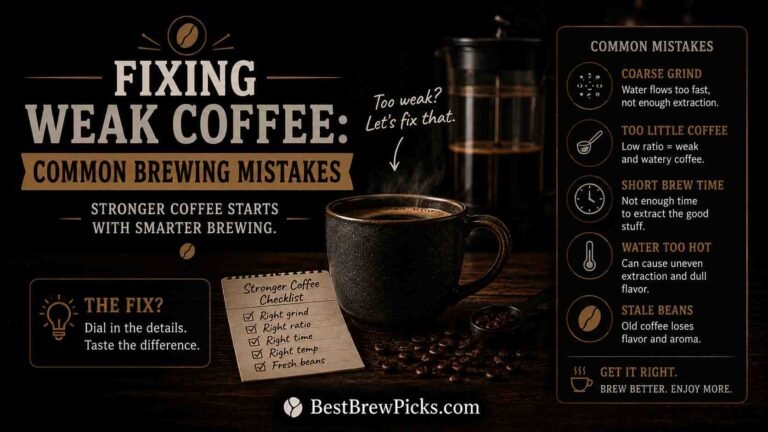
For method guidance, French Press Brewing Guide (Timing Water Temp) explains how steep time affects flavor. If your coffee tastes weak as well as bitter, Fixing Weak Coffee: Common Brewing Mistakes can help you separate under-extraction from over-extraction more clearly.
Too fine a grind
A too-fine grind slows water too much and increases extraction. That often leads to harsh, drying bitterness.
If bitterness shows up consistently, try grinding one step coarser. Small changes often make a big difference.
Water that is too hot
Water above the ideal range can pull more bitter compounds from the grounds. This matters especially with dark roasts and fine grinds.
Let boiling water rest briefly before brewing if you do not use a thermometer. That simple step often reduces harshness immediately.
Brewing too long
Long brew times keep pulling compounds long after sweetness and clarity should peak. That can make the cup taste dry or burnt.
Shortening the brew or steep often restores balance. Match the time to your brewing method.
Roast Level and Bean Choice
Roast level strongly influences how bitter a coffee tastes. Dark roasts naturally create more roast-driven bitterness because the bean spends more time developing smoky, toasted, and deeply caramelized flavors. That style can taste excellent when well roasted, but it can also edge into ash, char, or burnt toast if pushed too far. Therefore, roast level matters just as much as brewing if bitterness keeps showing up.
Light roasts usually taste less bitter and more acidic or fruity. They preserve more of the bean’s original character and often highlight brightness, sweetness, and clarity. However, a light roast that is under-extracted can still taste sharp or unpleasant, so low bitterness does not automatically mean better balance. Medium roasts often give the most balanced starting point for people trying to reduce bitterness without losing body.
Bean choice also matters. Robusta tends to taste more bitter and earthy than Arabica, which can make some blends feel heavier or harsher. If you already prefer a bold cup, that may be fine. If you want less bitterness, a high-quality Arabica coffee often gives you more sweetness and nuance. In addition, freshness plays a major role because stale coffee often tastes more bitter, papery, and dull than fresh coffee.
For roast comparison, Light Roast vs Dark Roast: Taste Differences explains how roast level shapes bitterness. If bean type matters too, Best Arabica vs Robusta Coffee Beans Explained helps you understand why certain coffees naturally taste more intense.
Dark roast and bitterness
Dark roast often tastes more bitter because roast character becomes a bigger part of the cup. That can work well for some drinkers, especially in milk drinks.
If you dislike that harsh edge, try a medium roast instead. It often keeps the cup bold without pushing it so far.
Freshness and stale flavor
Stale coffee often tastes flatter and more bitter than fresh coffee. Once aroma fades, bitterness becomes more noticeable.
Whole beans usually stay fresher longer than pre-ground coffee. That alone can reduce bitterness in the cup.
Practical Fixes at Home
How to fix bitter coffee starts with changing one variable at a time. First, grind coarser if the coffee tastes dry, harsh, or burnt. Next, lower the water temperature slightly if you brew near boiling. Then shorten brew time if the coffee still tastes overly extracted. These adjustments usually solve the problem faster than changing beans immediately.
If your coffee is pre-ground, freshness may be the issue. Try whole beans and grind only what you need before brewing. Fresh grinding preserves aroma and helps sweetness show up more clearly, which can balance bitterness. In contrast, older ground coffee often pushes the cup toward stale, flat bitterness even when the brewing recipe looks correct.
You should also check your ratio. Too little coffee can make bitterness more obvious because the cup lacks enough sweetness and body to support the roast character. Using a better dose may reduce the perception of bitterness even though the coffee becomes stronger overall. Therefore, strength and bitterness do not always move in the same direction.
Water quality matters too. Very hard water can emphasize dull or chalky bitterness, while poorly filtered water can muddy the cup. Using a filter designed for coffee machines can improve balance and reduce scale at the same time. That makes the machine more consistent and the cup cleaner. For more equipment context, Best Water Filters for Coffee Machines helps you compare filtration options. If your machine also needs upkeep, How to Clean an Espresso Machine Properly explains how residue can affect taste.
- Grind coarser if the coffee tastes harsh or dry.
- Lower brew temperature slightly if you brew very hot.
- Shorten brew time if the coffee tastes over-extracted.
- Use fresh whole beans instead of older pre-ground coffee.
- Check your ratio so the cup has enough sweetness and body.
- Use filtered water if your tap water is very hard or unbalanced.
If you brew espresso, dialing in the shot matters even more because tiny changes create noticeable flavor shifts. If you brew pour over, pouring too slowly or grinding too fine often triggers bitterness. If you brew French press, a long steep and very fine grind can easily push the cup too far. Therefore, the best fix depends on the method you use most often.
For a brewing foundation, How to Brew the Perfect Cup of Coffee gives a useful overview of extraction basics. If you want to compare bitterness with other taste issues, Fixing Weak Coffee: Common Brewing Mistakes shows how under-extraction can create the opposite problem.
Conclusion
Why Your Coffee Tastes Bitter (And How to Fix It) usually comes down to brewing too hard, too long, or too hot, or choosing a roast and bean style that pushes bitterness forward. The good news is that most bitter coffee problems have simple fixes: grind coarser, lower temperature slightly, shorten brew time, use fresher beans, and check your ratio.
Once you separate normal roast bitterness from harsh over-extraction, troubleshooting gets much easier. With a few small adjustments, you can turn a dry, bitter cup into one that tastes smoother, sweeter, and much more balanced.